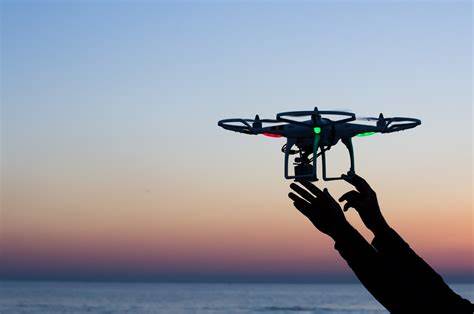

Drones, also known as Unmanned Aerial Vehicles (UAVs), Miniature Pilotless Aircraft, or Flying Tiny Robots, are gaining popularity at a rapid rate. In terms of widespread adoption and utilization, drones are still in their youth, yet they have already shattered hard conventional barriers in fields that previously appeared resistant to similar technological advancements.
Drones have recently taken on a crucial role in the operations of many enterprises and governmental agencies, and they have successfully penetrated markets where some industries were either inactive or lagging behind. Drones are proving to be very helpful in places where man cannot access or is unable to operate in a fast and efficient manner, such as making quick deliveries during rush hour or surveying an unreachable military base.
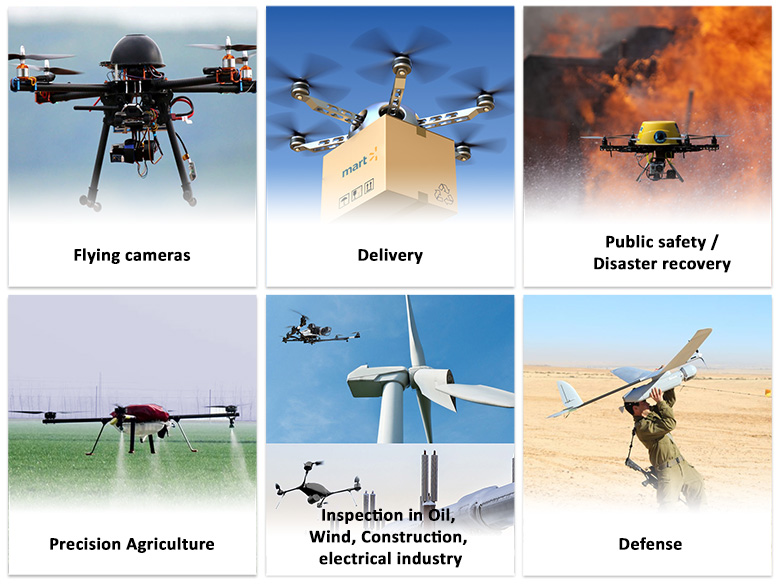
Some of the main uses drones provide industries worldwide include boosting job efficiency and productivity, reducing workload and production costs, improving accuracy, enhancing service and customer relations, and resolving security challenges on a large scale. When more and more companies began to recognize drone technology’s potential, scope, and scale of global reach, adoption across industries quickly moved from the trend stage to the mega-trend stage.
Drones can reach the most remote locations with little to no human intervention and with the least amount of work, time, and energy required. Whether they can operate by remote control or by a smartphone app. One of the main reasons they are being adopted globally, especially by these four, is because of this main sectors like Military, commercial, personal, and future technology .
Drone Technology: History and Current Applications
In spite of the fact that drones have been present for more than 20 years, their origins can be traced to World War I, when both the United States and France worked on creating autonomous, unmanned aircraft. The adoption of drones, the expansion of their use across businesses, and public awareness have all increased significantly during the past few years.
Drone technology has advanced and thrived in recent years, from technologically staffing key military zones to attracting people worldwide. People, businesses, and governments realize that uses of drones for a variety of purposes, such as:
- using drones for video and journalism
- Express delivery and shipping
- collecting data or providing necessities for disaster management
- Drones with thermal sensors for use in search and rescue missions
- Locations and terrain that are inaccessible according to a map
- Building inspections for safety
- monitoring crops with specificity
- teleoperated cargo delivery
- Border patrol and law enforcement surveillance
- Cyclone and tornado tracking and forecasting
As a result of the numerous investments that makes daily in this promising business. Hundreds of additional uses for drones are currently being developed.
Using drones for the military
In the modern world, using drones for military purposes has taken precedence. Drones have long been a staple of militaries around the world, used for target decoys, combat operations, research and development, and surveillance.

In the upcoming years, military spending will continue to be the primary factor driving drone investment, according to a recent analysis by Goldman Sachs. By 2020, Goldman predicts that worldwide militaries would spend $70 billion on drones, which will be crucial in resolving current conflicts and taking the position of human pilots.
Business Drones Technology
As more and more sectors incorporate drone use into their routine everyday operations, commercial drone usage is gaining ground and has become a hot topic. According to BI Intelligence, the premium research service of Business Insider, the market for commercial and civilian drones will expand at a compound annual growth rate (CAGR) of 19% between 2015 and 2020, as opposed to 5% growth on the military side.
The cost of commercial drone customization will decrease, opening the door to additional capabilities in a variety of specialized markets. In the near future, sophisticated drones may do commonplace jobs like automatically fertilizing farming fields, monitoring traffic accidents, inspecting inaccessible locations, or even delivering pizza.
Technology for Personal Drones
Given the history of drone accidents into packed stadiums and clashes with airplanes, regulators and law enforcement agencies’ safety worries about civilian drones tend to increase as their sales do. Consumer Technology Association, a lobbying organization, forecasts that 2.8 million consumer drones will be sold in the United States in 2016–17, generating $953 million in sales.

According to BI Intelligence, drone sales will surpass $12 billion in 2021. A huge revenue will come from the selling of personal drones used by common tech aficionados for gaming, recording audio, taking still photos, and filming.
Drone technology of the future
Future drone technology is currently undergoing ground-breaking progressive advancement since drone technology is continually changing. Drone technology has seven potential generations, with the majority of the current technology falling into the fifth and sixth generations.
The breakdown of technology generations is as follows:
- Generation 1 All types of basic remote-control aircraft
- Generation 2 features a static design, a fixed camera mount, still images and video recording, and manual piloting control.
- Generation 3 Static design, two-axis gimbals, HD video, basic safety models, and aided piloting are features .
- Generation 4 Transformational designs, three-axis gimbals, 1080P HD video or higher-value instruments, enhanced safety modes, and autopilot modes are all features.
- Generation 5 Innovative designs, 360-degree gimbals, 4K video or higher-quality instruments, and intelligent piloting modes characterize .
- Generation 6 Platform and payload adaptability, automatic safety modes, intelligent piloting models and complete autonomy, commercial viability, safety and regulatory standards-based design, and airspace awareness are all features.
- Generation 7 Platform and cargo interchangeability, automated safety modes, improved intelligent piloting models, full autonomy, full airspace awareness, and auto action which is also fully commercially suitable (takeoff, land, and mission execution)
When 3DRobotics revealed the world’s first all-in-one Smart Drones named Solo, Generation 7 of drones has already begun. The next major advancement in drone technology will be smart drones with built-in safety and compliance features, clever accurate sensors, and self-monitoring which will open up new prospects in the transportation, military, logistical, and commercial sectors.

Drones will get safer and more dependable as these technologies advance and expand. This would enable their ensuing widespread acceptance, assuming that the stringent USFAA regulations regarding drone technology and usage be relaxed.