

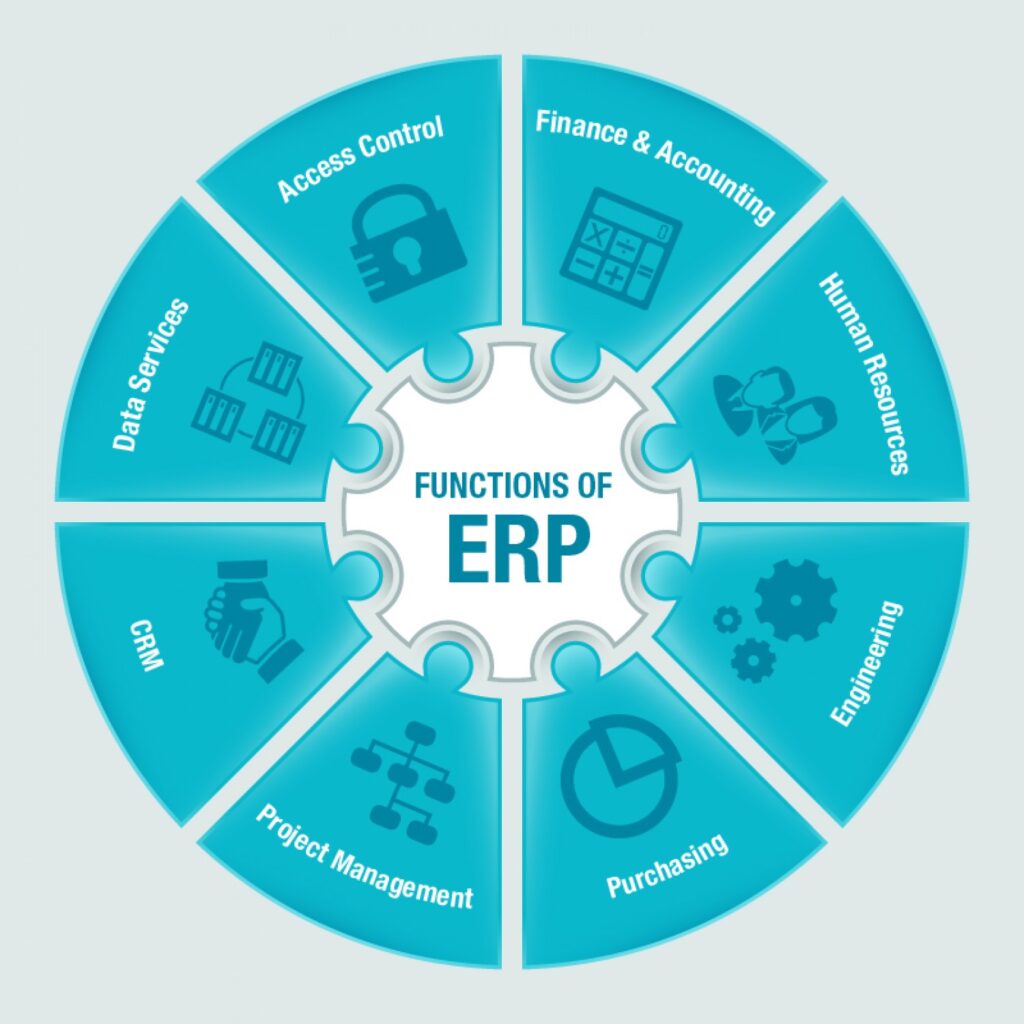
Enterprise resource planning is known as ERP. Information may be managed inside a company using the robust and strategic business process management features included in ERP software. Even though each business and organization today are unique, they all face the same problem: they all need a trustworthy and effective means to store and retrieve information if they want to remain competitive in the current business environment. This is where ERP solutions are useful. ERP systems combine all business operations into a single, all-encompassing information system that can be accessed by users throughout the whole firm.
Business owners and executives may automate and streamline time-consuming back-office processes, support staff in becoming more effective and successful in their positions, and get real-time visibility into the inner workings of their operations with the aid of good ERP software. You will receive a comprehensive understanding of enterprise resource planning from this resource.
The following 10 terminology and concepts related to enterprise resource planning are important to grasp before deciding whether to use an ERP solution at your company:
- Business process management solutions that may be used to manage information across a business include enterprise resource planning (ERP).
- ERP software that is installed locally on your servers and hardware and is controlled by your IT personnel is known as on-premise ERP.
- ERP software that is handled off-site by your provider and is based on the cloud
- The movement of commodities and services from their place of origin to their point of consumption is known as the supply chain.
- Third-Party Vendors: Companies or partners that your ERP system can integrate.
- Planning for capacity requirements: A technique for estimating a company’s production capacity.
- Mobility Solutions: The ability to use mobile devices and access your data through your ERP from anywhere.The several types of ERP systems that you might use in your company are known as ERP deployment options.
- Business architecture is the overall structure and workings of a company.
How to Pick the Best Option
The evaluation, selection, and implementation process is a long-term strategic choice for your firm, whether you’re searching for your first ERP solution or wanting to upgrade from an existing system.
Here are eight easy stages for a successful ERP system selection to guide you through the process:
Step 1: Evaluation – Call a meeting of your leadership and start the first ERP discussions. Ensure that everyone is aware of your provider evaluation process.
Step 2: Perform an Assessment – Analyze your company’s operations and business critically to identify what’s functioning well, what issues you are facing, and what you believe you need in order to grow or develop.
Step 3: Establish Criteria – Create a set of standards for judging vendors. Features, cost, platform, and any other factors your team deems significant for assessments may all be used as criteria.
Step 4: Schedule phone conversations, in-person meetings, or online product demonstrations with sales people and subject matter experts at the suppliers you are considering.
Step 5: Create a shortlist of 2-3 people to follow up with from your long list in.
Step 6: Make Contact – Get in touch with the companies on your shortlist and arrange follow-up contacts to find out more about how their goods might benefit your company.
Step 7: Write Down Specific Questions You Want Each Seller to Answer – Write down specific questions you want each vendor to answer on the follow-up call.
Step 8: Verify Vendor References – Speak with other businesses that have used the vendors’ ERP systems. Find out what they appreciate, disapprove of, or weren’t anticipating, as well as whether or not they would truly suggest the vendor you are requesting. To come to a judgement, get as much information as you can from them.
How Techmapperz Can Benefit Your Company?
Techmapperz promotes corporate expansion. The industrial, distribution, retail, and service industries that we serve all require adaptable, industry-specific ERP software. Every solution, whether it is in the cloud, hosted, or on-premises, is based on 50 years of expertise with the particular business processes and operational needs of our clients. With a thorough grasp of your sector, Epicor solutions manage complexity while fostering development. Powerful solutions emerge as a consequence, freeing up your resources so you may expand your firm.
Placing an ERP System into Practice at Your Organization
- When your company is finally prepared to adopt an ERP system, remember to use these best practices and advice to ensure success:
- Recognise critical needs and business processes. Learn all there is to know about the components of your firm, including the areas, procedures, and tools. In order to prepare for introducing a new system at your company, take the time to document problem areas, procedures that work, questions you have, and any other observations you wish to record.
- Create a business case for ERP that shows a profit. Compile a list of the advantages of using ERP software. Share your list with your team’s decision-makers, stakeholders, and important players. Concentrate on the current problems at your company and how you believe an ERP system may solve them. Select the key performance indicators (KPIs) you’ll use to monitor your organisations performance when the new system has been completely installed.
- Ensure effective resource commitment and project management. Give one of your team members the responsibility of overseeing the whole implementation process. Make certain that individual has the tools necessary for success.
- Obtain the support of the leadership and the company. Get the whole organisation, from top to bottom, to support and commit to your project. Ensure that everyone is aware of what you are doing, why you are doing it, and how it will influence them and their job.
- Understand the importance of early planning. Planning ahead can help your company shorten the time it takes to completely integrate an ERP system. Consider the resources you’ll need at each stage of the deployment process to ensure that everything goes as smoothly and effectively as feasible.
- Early in the implementation phase, concentrate on data migration. Make arrangements to begin the migration process as soon as feasible after deciding how much historical data you want to import into your system. Your company’s operations might suffer if you wait until the very last minute. Spend money on change management and training. Give team members and staff adequate time to comprehend the rationale behind the change and how it will influence their individual duties. Make sure everyone is on board and let them know they can come to you for assistance if they do.
- Be aware of your implementation of ERP. Keep in mind the primary reason you are putting a new system in place. Create a business strategy that outlines the needs, measurements, and advantages the organisation anticipates from an implementation.
- When you need it, seek outside assistance. Reach out to a consultant and use them for their knowledge and suggestions if you anticipate needing a little more assistance throughout any stage of the implementation process.
The entire implementation process will go much more easily if these suggestions and best practices are followed. Once the system is in place, they will also assist you in gaining the support of your staff members you need to achieve the objectives and KPIs you wish to strive toward.